DNR: Do Not Reciprocate
Launching DNR: Do Not Reciprocate
Preparing the browser build...
DNR: Do Not Reciprocate
























Play DNR: Do Not Reciprocate in your browser
Niko is back on the ward for the nth time this year, and three specialists have decided that this admission belongs to them. DNR: Do Not Reciprocate turns a routine round of examinations into a quiet contest over one patient, and the player above runs the whole thing in your browser — no download, no account, just press Play and let the first doctor call you in.
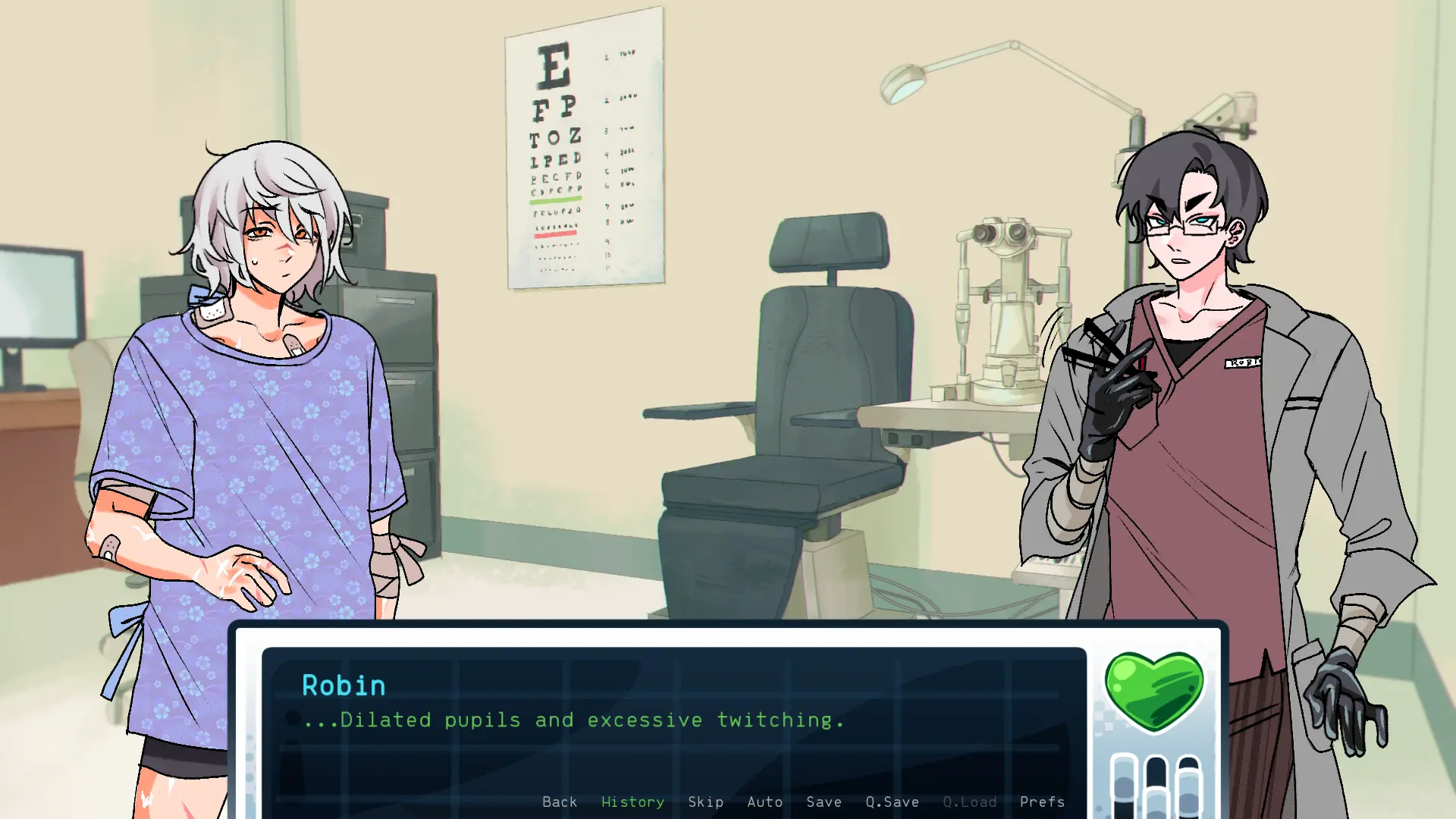
The framing is deliberately mundane. A neurologist asks you to repeat a string of numbers. A cardiologist listens to a heartbeat that is faster than it should be. An optometrist notes dilated pupils and excessive twitching. Every one of those observations is true, and every one of them is also a reason to keep you where you are.
The three doctors
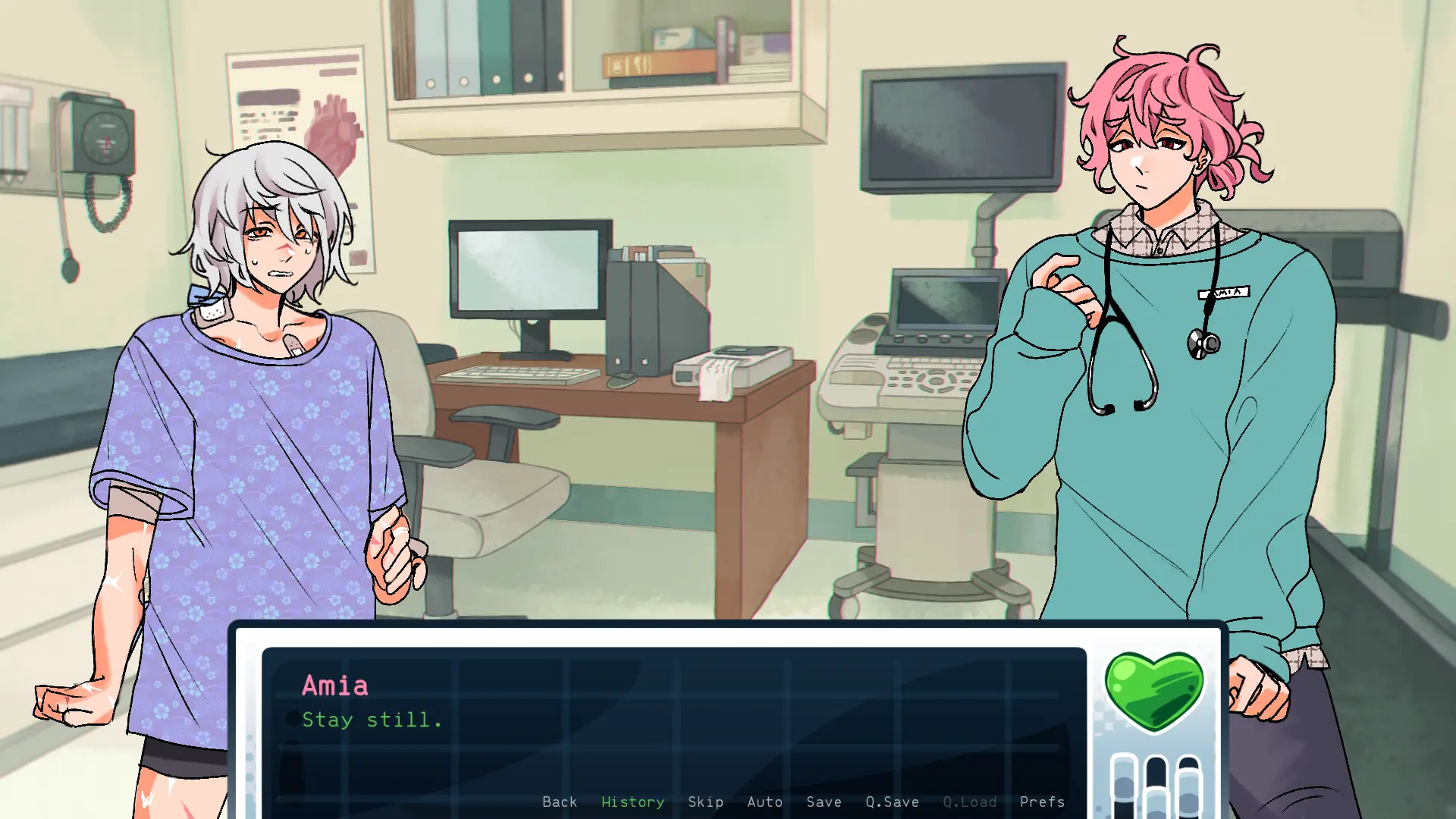
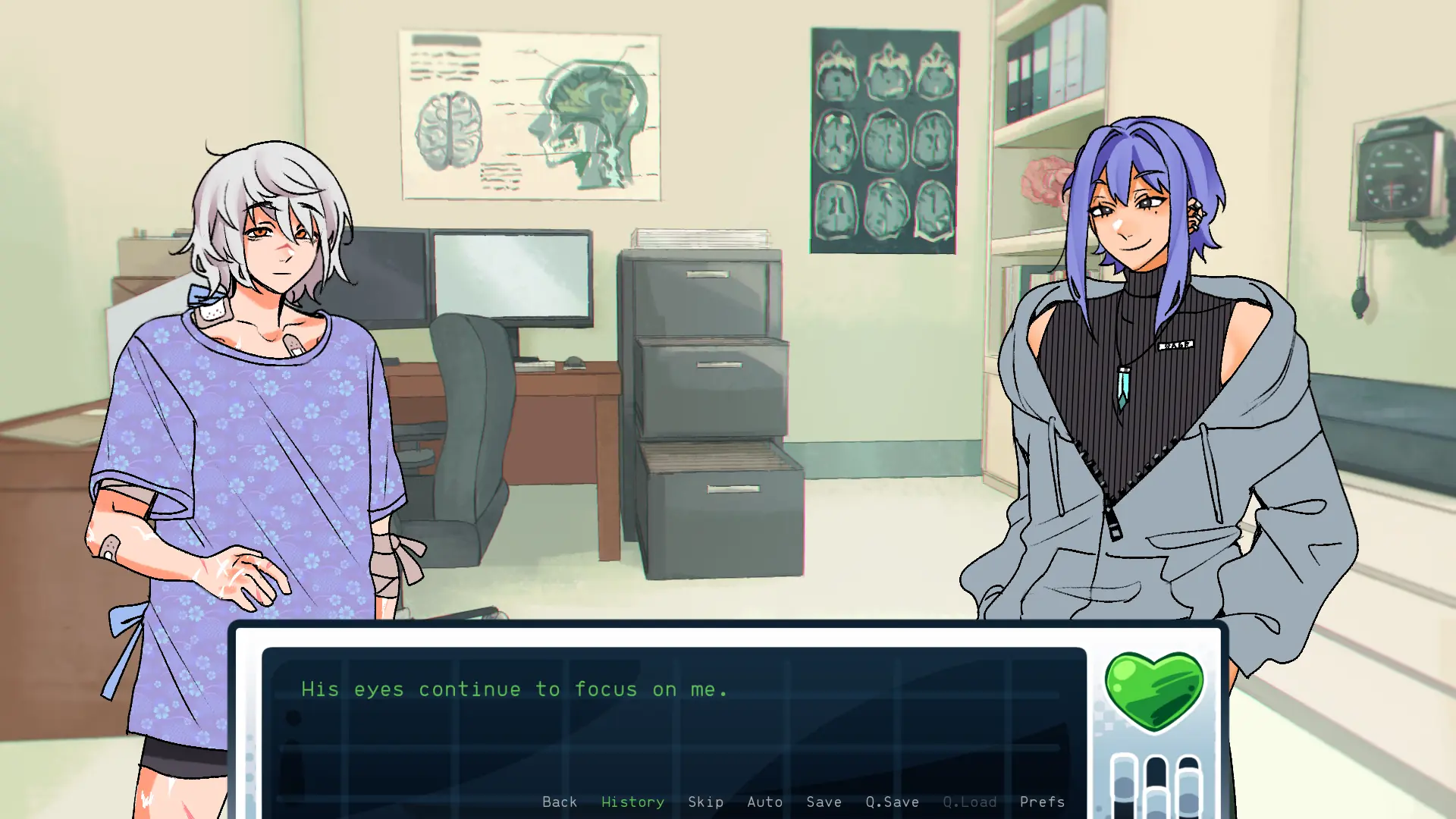
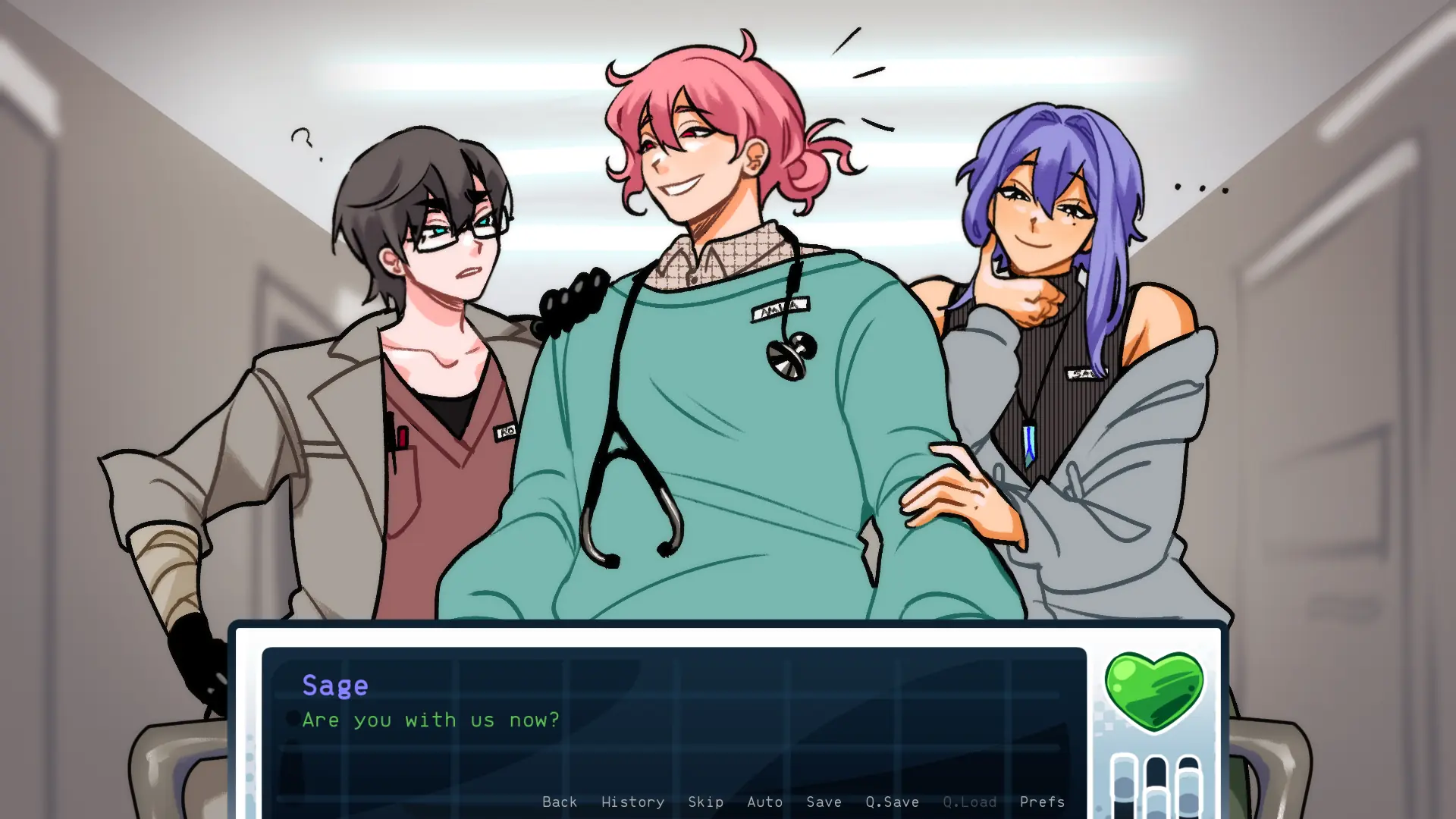
Sage, the neurologist, holds his examinations under a wall of brain scans and treats attention as something he is entitled to measure. Amia, the cardiologist, is the warmest of the three on the surface and the most physical in practice, always one test away from another test. Robin, the optometrist, reads symptoms aloud in a flat clinical register that makes praise and diagnosis indistinguishable.
They are written as colleagues who are perfectly polite to each other and openly territorial about Niko, which is where a lot of the game’s humour lives before the tone turns. Sharing a corridor with all three of them at once is one of the more unsettling scenes in DNR: Do Not Reciprocate, and it happens early.
How the story splits
The prologue walks you through all three examinations in order — Sage, then Amia, then Robin — and each one contains a single answer that gives that doctor his opening. Take it and the chapter cuts to black and drops you into his route. Stay evasive and you move on to the next office. Deflect everyone and you finish the prologue in optometry anyway, which is the game’s way of saying that nobody here was ever going to let you leave.
From there a route is four chapters long with five or six decision points, and the writing does not signal which choices matter. DNR: Do Not Reciprocate is short enough that reading a route twice is a reasonable way to see the other side of it.
Affection or obsession
Each route quietly keeps two counts: how much affection you have shown that doctor, and how much obsession you have fed. Nothing on screen displays either number — the heart and the vials beside the dialogue box are part of the artwork, not a meter. When the route reaches its final chapter, the game checks the obsession total, and a run that crossed the threshold gets the obsession ending instead of the affection one.
That design is the whole argument of DNR: Do Not Reciprocate. You do not choose an ending; you accumulate one, a few sentences at a time, usually while being agreeable. Six endings exist in total and each has its own illustration, so completionists have a clear target: three routes, both sides of each.
Before you press Play
The content warnings are not decorative. Medical malpractice, drugging, forced procedures and hypnosis all appear on screen, and the obsession endings are where they land hardest. The art stays in a soft, bright clinical palette throughout, which makes those scenes considerably worse in the way the game intends.
If that sounds like your kind of story, start with whichever specialist unsettles you most and save before every conversation that changes temperature. DNR: Do Not Reciprocate rewards a second run more than almost any short visual novel we host — the same scene reads completely differently once you know what the doctor was already planning.
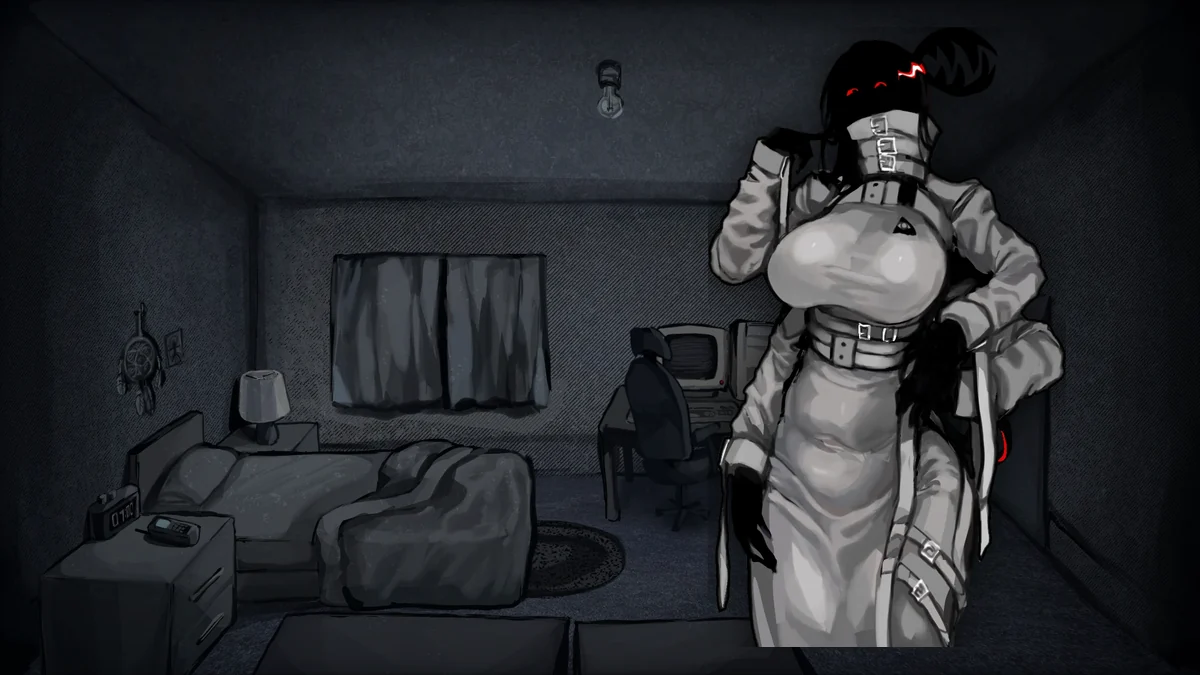
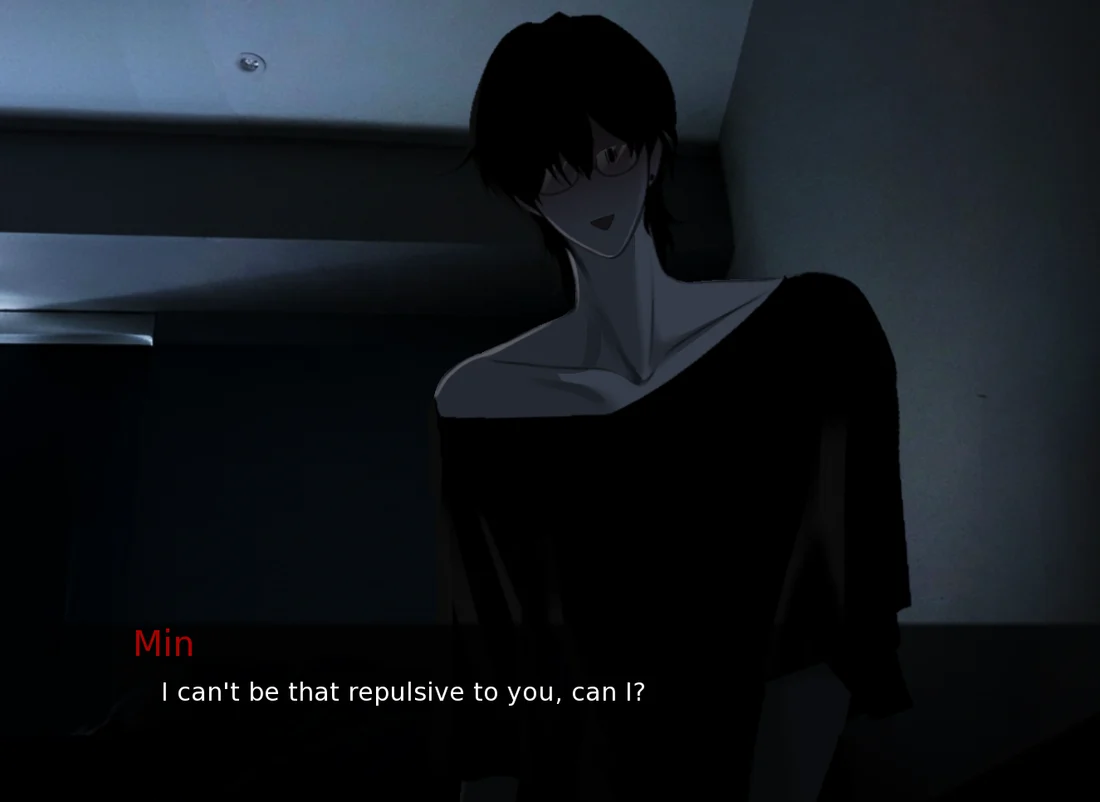
DNR: Do Not Reciprocate Screenshots
DNR: Do Not Reciprocate FAQ
What kind of game is DNR: Do Not Reciprocate?
It is a yandere romance visual novel with three routes, six endings and seven story CGs, told from the perspective of Niko, a patient admitted to hospital yet again. There is no combat and no puzzle solving — you read, and at fixed moments you choose how Niko answers the doctor in front of him.
Who are the three love interests?
Sage is the neurologist, Amia is the cardiologist, and Robin is the optometrist. Each one examines Niko in the shared prologue, each one finds a reason he should not be discharged, and each one has a full route of their own once you commit to them.
How do I get onto a specific route?
You are not asked to pick from a menu. During each doctor's examination there is one answer that gives them the excuse they were waiting for, and taking it locks you into that route. Deflect all three exams and the story hands you to Robin by default.
How many endings are there?
Six: every route resolves into either an affection ending or an obsession ending, and both are fully written scenes with their own CG. Which one you get depends on choices you make across the four chapters of a route, not on a final decision at the end.
How long does one playthrough take?
A single route runs roughly 30 to 40 minutes at a normal reading pace. Seeing all six endings takes about two to three hours, and the built-in skip function makes repeat runs much faster because it only stops at text you have not read.
What are the content warnings?
Medical malpractice, drugging, forced medical procedures and hypnosis, plus the possessive behaviour the genre is named for. This is a horror-tinged romance rather than a comfort read, and the obsession endings lean hardest into those themes.
Can I play on a phone?
Yes. The browser build accepts touch input and the interface scales to portrait and landscape, though roughly fifty megabytes of art and music have to download on the first visit, so start it on Wi-Fi. A larger screen is kinder to the dialogue font.